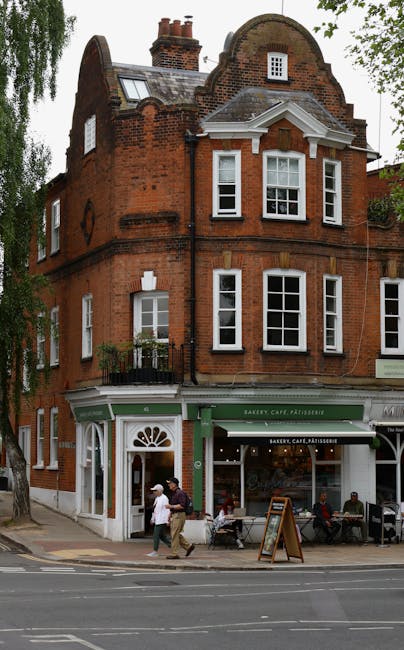
Moving rules for listed buildings in Fulham: what you need to know before moving day
Moving into or out of a listed building in Fulham can feel a bit more delicate than a standard house move. There are the usual moving-day pressures, of course, but also heritage considerations, building restrictions, access limits, and the simple fact that old properties do not always play nicely with bulky furniture and modern schedules. If you are trying to understand the moving rules for listed buildings in Fulham, this guide breaks everything down in plain English so you can plan properly, avoid awkward surprises, and protect both the building and your belongings.
In practice, the biggest challenge is usually not the move itself. It is knowing what needs checking beforehand, what can be carried through the front door without risk, and which decisions should be made with a little more care than usual. Let's face it, one rushed turn on a narrow staircase can become an expensive headache very quickly.
This article explains the practical rules, the typical risks, the best way to prepare, and the support options that can make a listed-building move far less stressful. If you are still comparing moving help, you may also find our pages on removals, house removals, and packing and boxes useful while you plan.
- Quick takeaway: listed buildings need more care, more advance checks, and gentler handling than a typical move.
- Best approach: plan access, protect original features, and confirm any building-specific restrictions early.
- Local reality: Fulham properties often combine period architecture with tight access, which makes good preparation essential.
Table of Contents
- Why moving rules for listed buildings in Fulham matters
- How moving rules for listed buildings in Fulham works
- Key benefits and practical advantages
- Who this is for and when it makes sense
- Step-by-step guidance
- Expert tips for better results
- Common mistakes to avoid
- Tools, resources and recommendations
- Law, compliance, standards, or best practice
- Options, methods, or comparison table
- Case study or real-world example
- Practical checklist
- Conclusion
- Frequently asked questions
Why moving rules for listed buildings in Fulham matters
Listed buildings are protected because of their historic or architectural importance. That means the building fabric matters more than it would in a newer property. Cornices, stair rails, timber floors, sash windows, ornate hallways, old plaster, decorative tiles, and original doors can all be vulnerable during a move. Even something that feels routine in a modern flat, like removing a sofa or taking off a door, can be a bad idea if it has not been checked first.
Fulham has plenty of period homes, mansion blocks, converted terraces, and properties with shared entrances or narrow internal layouts. These buildings often look elegant and spacious from the outside, but the practical reality can be a little awkward on moving day. Low ceilings, tight turns, uneven steps, and parking restrictions can all shape how the move has to be done.
Why does this matter so much? Because damage in a listed building can be costly, disruptive, and sometimes avoidable. A scratched banister or chipped stair tread is not just an inconvenience; it can create repair obligations and upset relationships with landlords, freeholders, managing agents, or neighbours. In our experience, a careful move is always cheaper than a reactive repair job. Always.
There is also the human side. People moving from a listed property are often already juggling paperwork, handovers, removals, and deadlines. If you add building rules to that mix, the day can become unnecessarily stressful unless everything is mapped out early.
How moving rules for listed buildings in Fulham works
There is no single universal playbook, because the exact rules depend on the property, the building management, the ownership structure, and the level of protection in place. That said, most listed-building moves follow the same broad pattern.
First, check whether the building itself has any move-day restrictions. Some properties require advance notice, approved time windows, protective coverings in communal areas, lift bookings, or moving through designated entrances only. Others may ask for insurance details before allowing movers on site. If the building is part of a managed block, the building's rules can be even more specific.
Second, assess the route. The route includes everything from the pavement outside to the final room inside. You need to know whether a large item can be moved without scraping walls, hitting stair corners, or damaging original finishes. Sometimes a piece that looks fine on paper simply will not turn through the hallway. That is not dramatic; it is just old-building geometry.
Third, decide whether any items need to be dismantled, wrapped, or carried in a different way. A heavy wardrobe, a piano, a fragile mirror, or an antique table may need additional planning. If the move involves larger or delicate pieces, services such as piano removals or carefully coordinated furniture removals may be more appropriate than a simple lift-and-go approach.
Finally, the move should be timed sensibly. In listed buildings, timing is not just about convenience. It can affect access, noise, neighbour disruption, parking availability, and the amount of time the team has to work without pressure. A calm morning slot is often far easier than trying to squeeze everything in late afternoon while everyone is tired and the stairs are getting crowded.
A useful way to think about the process
Think of it as three layers: permissions, protection, and execution. If any one of those is weak, the move becomes riskier. If all three are in good shape, even a complex move can feel surprisingly manageable.
Key benefits and practical advantages
It may sound counterintuitive, but following the right moving rules for a listed property can actually make the whole move faster. When everyone knows what is allowed, what is fragile, and where things are going, there is less backtracking on the day.
Here are the main advantages:
- Lower risk of damage: careful route planning protects staircases, flooring, mouldings, and doors.
- Smoother access: approved access arrangements reduce delays at the front door or in shared halls.
- Better neighbour relations: less noise, fewer surprises, and less obstruction in communal areas.
- Stronger compliance: you are less likely to clash with building rules, lease conditions, or insurance requirements.
- Less stress: a move that is planned properly feels calmer. Simple as that.
There is also a practical benefit that people sometimes overlook: clarity about what will not fit. If a large item cannot go safely through the route, you can make a decision before the removal crew arrives. That might mean dismantling it, storing it, donating it, or moving it with a specialist approach. If you need temporary holding space, storage can be a sensible part of the plan.
For many Fulham residents, especially in period conversions, the biggest advantage is peace of mind. You are not guessing. You are preparing. And that difference matters more than people expect.
Who this is for and when it makes sense
This guide is for anyone moving belongings into or out of a listed building in Fulham, but it is especially relevant if any of the following apply:
- you live in a Georgian, Victorian, Edwardian, or otherwise historic property
- you are in a converted flat with shared hallways or a narrow stairwell
- the building has original features that need protection
- your move includes bulky, fragile, or high-value items
- the landlord, freeholder, or managing agent has set move windows or access rules
- parking is limited, or the property sits on a busy residential street
It also makes sense for people who are not moving everything in one go. For example, if you are refurbishing one room at a time, or taking furniture out ahead of works, a careful plan can stop you from damaging stair rails or floorboards on repeated trips. That kind of repeat movement is where people get a bit casual, and honestly that is when things go wrong.
If the move is part of a wider property transition, such as downsizing, relocation for work, or relocating a small business from a listed premises, you may want a more structured service approach. Pages like home moves, flat removals, and commercial moves can help you think through the wider logistics.
Step-by-step guidance
If you want the move to go smoothly, use a simple sequence. No fancy jargon, no overcomplicated checklist. Just a sensible order of operations.
- Confirm the building status and house rules. Ask whether the property has specific moving times, lift booking rules, entrance restrictions, or protection requirements for communal areas.
- Walk the route in advance. Measure door widths, stair turns, hallway bottlenecks, and any awkward corners. If possible, do the walk with the largest item in mind, not just the boxes.
- Identify fragile features. Look for original woodwork, tiled floors, decorative plaster, or older paintwork that could chip or mark easily.
- Sort items by handling needs. Separate heavy, delicate, awkward, and standard items. A box of books is one thing; a century-old mirror is another.
- Decide what needs wrapping or dismantling. Some items should be partially dismantled to pass safely through narrow spaces. Do not force it if the angle looks wrong.
- Arrange parking and loading access. In Fulham, this can be a real issue. If your vehicle cannot park close enough, the carry distance increases and so does the chance of delays.
- Prepare the property. Clear hallways, remove loose rugs, protect floors, and keep entrances tidy. Even a small amount of clutter can become a trip hazard.
- Brief the movers. Tell them what is fragile, what is not to be touched, and which pieces need special handling.
- Move in a calm order. Start with the easiest access items, then the larger or more awkward ones, and finish with anything that needs extra care.
- Check the building and belongings afterwards. A quick walk-through helps catch marks, scuffs, or forgotten items before everyone leaves.
That sounds straightforward, and mostly it is. The key is not to skip the dull parts. The dull parts are the useful parts, really.
Expert tips for better results
After enough complex moves, a few patterns become obvious. The jobs that go well are usually the ones where the client, the mover, and the building rules are all aligned before anyone picks up a box.
- Take photos of sensitive areas before the move. This is not about being distrustful. It is about knowing what was there before anything started.
- Use proper floor and corner protection. Original timber and polished stone can mark far more easily than people think.
- Label items by room and fragility. Clear labels save time and stop things from being carried the wrong way.
- Don't overload boxes. In older buildings, a heavy box on a tight staircase is more trouble than it is worth.
- Keep one person in charge of decisions. Too many voices on the day leads to confusion, and confusion leads to delays. Familiar story, that one.
- Leave a buffer in the schedule. Listed-building moves often take longer than a standard move. Build that into the plan from the start.
One thing we often see is people trying to save time by carrying too much at once. It rarely helps. A slower, steadier pace is usually the smarter choice, especially when there are original staircases or shared entrances involved.
If your move includes specialist items, you may also want support from packing and unpacking services or a suitably sized removal van rather than assuming a larger vehicle is always the answer. Sometimes a smaller vehicle with good access wins the day.
Common mistakes to avoid
Most problems in listed-building moves are not dramatic disasters. They are small, preventable mistakes that pile up. The kind of thing that feels minor until the front staircase has a scuff and everyone starts sighing.
- Assuming standard moving rules apply. They often do not. Listed properties may require extra approval or additional protection.
- Ignoring shared areas. Hallways, landings, lifts, and communal entrances need careful handling too.
- Forgetting access constraints. Parking, loading distance, and stair width can matter more than the size of the property itself.
- Leaving fragile items until last. By the end of the day everyone is tired, which is not the best moment for delicate pieces.
- Using the wrong moving method for the item. A heavy piano, antique cabinet, or oversized wardrobe may need a very different approach from standard furniture.
- Skipping communication with building management. If there are rules, it is better to know them before the van arrives.
Another common issue is underestimating the emotional strain. Moving from a listed home can feel personal, especially if the property has character and history. People get attached to those details. A quiet hallway in the morning, old floorboards, the smell of wood polish, the light through a sash window - these things matter. So yes, a move is logistics, but it is also a bit of a transition. That deserves respect.
Tools, resources and recommendations
You do not need a giant toolkit, but a few practical items and services can make life much easier.
| Need | Useful option | Why it helps |
|---|---|---|
| Fragile items | Strong boxes, wrapping paper, blankets, and clear labels | Reduces breakage and speeds up unpacking |
| Large furniture | Disassembly tools and extra padding | Makes awkward items easier to move safely |
| Complex access | Pre-measured route plan and building notes | Stops surprises at stairs, doors, and corners |
| Short-notice move | same-day removals | Helpful when timing is tight and flexibility matters |
| Manual lifting support | man and van | Useful for smaller moves, partial loads, or lighter access needs |
It is also worth keeping a simple written move plan. Not a giant spreadsheet unless you enjoy that sort of thing. Just a one-page note with access times, key contacts, fragile items, and any items that need special handling. A little paper trail can save a lot of head-scratching later.
If you are comparing ways to move, it can help to review whether you need a van-led service, a bigger vehicle, or a more structured team. Useful pages to look at include man with a van, removal services, and moving truck.
Law, compliance, standards, or best practice
For listed buildings, the exact legal position can depend on the property's designation and the way it is managed. In the UK, listed buildings are protected under heritage rules, and while many routine moves do not require formal heritage consent, you still need to avoid damage and follow any relevant building conditions or lease obligations.
That means a few things in practice:
- Do not remove or alter historic fabric without permission. This is especially important for fixtures, decorative finishes, original joinery, or fitted features.
- Check lease or management rules. Some buildings require notice periods, booking systems, or evidence of insurance before moving.
- Use proper lifting and handling methods. General workplace safety expectations still apply, including sensible manual handling and safe loading.
- Ensure insurance is in place. If a mover is carrying items through a protected or high-value property, adequate cover matters.
- Record any existing damage. Good documentation protects everyone if questions come up later.
Best practice is often more important than strict minimum compliance. A move may technically be allowed, but still be a bad idea if the staircase is too narrow or the item is too heavy for the route. In old buildings, judgment matters. You really do have to read the room - and the hallway, and the banister, and the ceiling height.
For added reassurance around safety and protection, it can be sensible to look at a mover's published health and safety policy, along with their insurance and safety information and terms and conditions.
Options, methods, or comparison table
Not every listed-building move needs the same setup. The best choice depends on the size of the job, the access conditions, and how much care the items need.
| Method | Best for | Pros | Watch-outs |
|---|---|---|---|
| Man and van | Smaller moves, lighter loads, flexible access | Simple, nimble, often easier on tight streets | May not suit very large or complex loads |
| Full removals service | Whole-property moves or multiple large items | More hands, better coordination, less lifting for you | Requires more planning and usually more time |
| Specialist item handling | Pianos, antiques, oversized furniture | Better protection for valuable or awkward items | Needs precise briefing and route checks |
| Storage-assisted move | Staged moves or temporary decluttering | Creates breathing room and reduces pressure | Requires extra scheduling and handling |
For many Fulham homes, the answer is not one method on its own. It is a combination. A smaller vehicle for access, storage for overflow, and careful packing for fragile pieces. That mix tends to work well in period properties.
Case study or real-world example
Here is a realistic example. A couple moving out of a listed Fulham flat had a beautiful but awkward staircase, narrow hallway, and a large wardrobe that had been assembled years earlier and, predictably, would not cooperate. The building manager requested advance notice and protection for communal flooring. No one was thrilled at first. The whole thing felt a little overfussy.
But once the move was planned properly, it became much easier. The wardrobe was dismantled in advance, fragile lamps were boxed separately, and the route was cleared before the vehicle arrived. The movers used protective coverings in the hallway, carried items one at a time, and kept the stairwell free from clutter. There was no panic, no scraping, no last-minute drama.
The interesting part? The couple said the move actually felt calmer than a previous move from a newer property. Why? Because the boundaries were clear. Everyone knew what was allowed and what was not. That made the day feel orderly, even though the building itself was the more demanding one.
That is often the real lesson with listed buildings. You cannot make the building modern, and you probably would not want to. But you can make the move modern in its planning: clear, careful, and respectful of the space.
Practical checklist
Use this checklist before moving day. It is simple, but it covers the things that matter.
- Confirm whether the property is listed and whether any building rules apply
- Tell the building manager, landlord, or freeholder about the move in advance
- Measure doors, stairs, hallways, and awkward turns
- Identify fragile original features that need protection
- Book parking or loading arrangements where needed
- Decide which items need dismantling or specialist handling
- Pack fragile items separately and label them clearly
- Protect floors, corners, and shared entrances
- Keep a contact list for the day
- Take quick photos before and after the move
- Build in extra time, because old buildings rarely run to the minute
If you are moving on a tight timetable, or the property is particularly tricky, it may be worth speaking to a provider that can handle both planning and lifting in one go. That is often less stressful than trying to coordinate several moving parts yourself.
Get a free quote today and see how much you can save.
Conclusion
Moving rules for listed buildings in Fulham are really about balance: protecting the historic character of the property while making the move efficient, safe, and manageable. Once you understand the access limits, the building expectations, and the handling needs of your belongings, the whole process becomes a lot less intimidating.
The best moves in listed properties are the ones that feel unhurried. Not slow for the sake of it, just calm enough to let the details be handled properly. That is where good planning pays off. A little preparation now can save a lot of stress later, and in a building with history, that care is never wasted.
If you are getting ready for a move in Fulham, take the time to plan it properly, ask the right questions, and choose the approach that fits the property rather than forcing the property to fit the move. It makes all the difference, honestly.
Frequently Asked Questions
Do I need special permission to move furniture in a listed building?
Usually, routine moving does not require heritage permission, but you may still need approval from a landlord, freeholder, or building manager. The important thing is to check the building rules first, because access conditions and protection requirements can still apply.
Can movers take large furniture through a listed property safely?
Yes, often they can, but only if the route is suitable and the item is handled correctly. In some cases the furniture needs dismantling, extra wrapping, or a different removal method. A quick measure-up before the day is well worth it.
What is the biggest risk when moving in a listed building?
The biggest risk is damage to original features such as staircases, floors, doors, and decorative finishes. Access problems are a close second. A bulky item in a narrow hallway can turn a routine move into a stressful one very quickly.
Are there extra moving rules for flats in period conversions?
Often, yes. Shared entrances, communal halls, lift bookings, and neighbour considerations can all come into play. Period conversions in Fulham can be especially tricky because the building may look generous on paper but feel tight on the day.
Should I tell the building manager before moving day?
Yes, absolutely. Even if the move is small, giving notice helps avoid disputes and makes it easier to arrange access, parking, or protection for communal areas. It is one of those small tasks that saves a lot of hassle later.
What should I do if my sofa will not fit through the staircase?
Do not force it. Measure first, and if needed consider dismantling, storage, or a different access approach. Sometimes the safest option is to move the item in a more controlled way rather than trying to squeeze it through.
Can a removal van park outside a Fulham listed building easily?
Not always. Parking and loading space can be limited, especially on residential streets. It is wise to check the available space, loading restrictions, and whether you need to plan for a longer carry from the vehicle to the property.
Do I need specialist movers for antiques or a piano?
If the item is valuable, heavy, or especially delicate, specialist handling is usually sensible. A piano, for example, is not something to treat casually on a narrow stairwell. Specialist support can reduce both damage risk and personal strain.
How do I protect original floors and stairs during a move?
Use floor coverings, corner protection, careful lifting, and clear routes with no clutter. It also helps to brief everyone involved so that they know which areas are most sensitive. In older homes, simple protection goes a long way.
Is storage useful for a listed-building move?
Yes, especially if you are moving in stages, decluttering before work starts, or waiting for access at the new property. Storage can take the pressure off on a busy move day and gives you a bit more breathing room.
How far in advance should I plan a listed-building move?
As early as you can. Even a straightforward move benefits from advance checks, and listed buildings usually need more preparation than standard properties. A bit of lead time helps you handle permissions, measurements, packing, and access arrangements without rushing.
What if the move has to happen quickly?
If time is tight, focus on the essentials: building rules, access, fragile items, and vehicle suitability. A shorter timetable can still work if the move is organised well. If needed, options like same-day support can help, but the route and protection checks still matter.